🔸 TLDR
▪️ Before Java 8, interfaces could not contain implementations.
▪️ Shared logic required abstract classes.
▪️ Default methods allow behavior directly in interfaces.
▪️ This enables multiple inheritance of behavior and easier API evolution.
🔸 THE PROBLEM BEFORE JAVA 8
Interfaces defined contracts, but could not contain implementations.
So developers often created abstract classes to share logic:
// Need abstract class to share behavior
public abstract class AbstractLogger {
 public void log(String msg) {
 System.out.println(timestamp() + ": " + msg);
 }
 abstract String timestamp();
}
// Single inheritance only
public class FileLogger extends AbstractLogger { }
The drawback?
A class could extend only one abstract class, limiting design flexibility.
🔸 THE MODERN APPROACH (JAVA 8+)
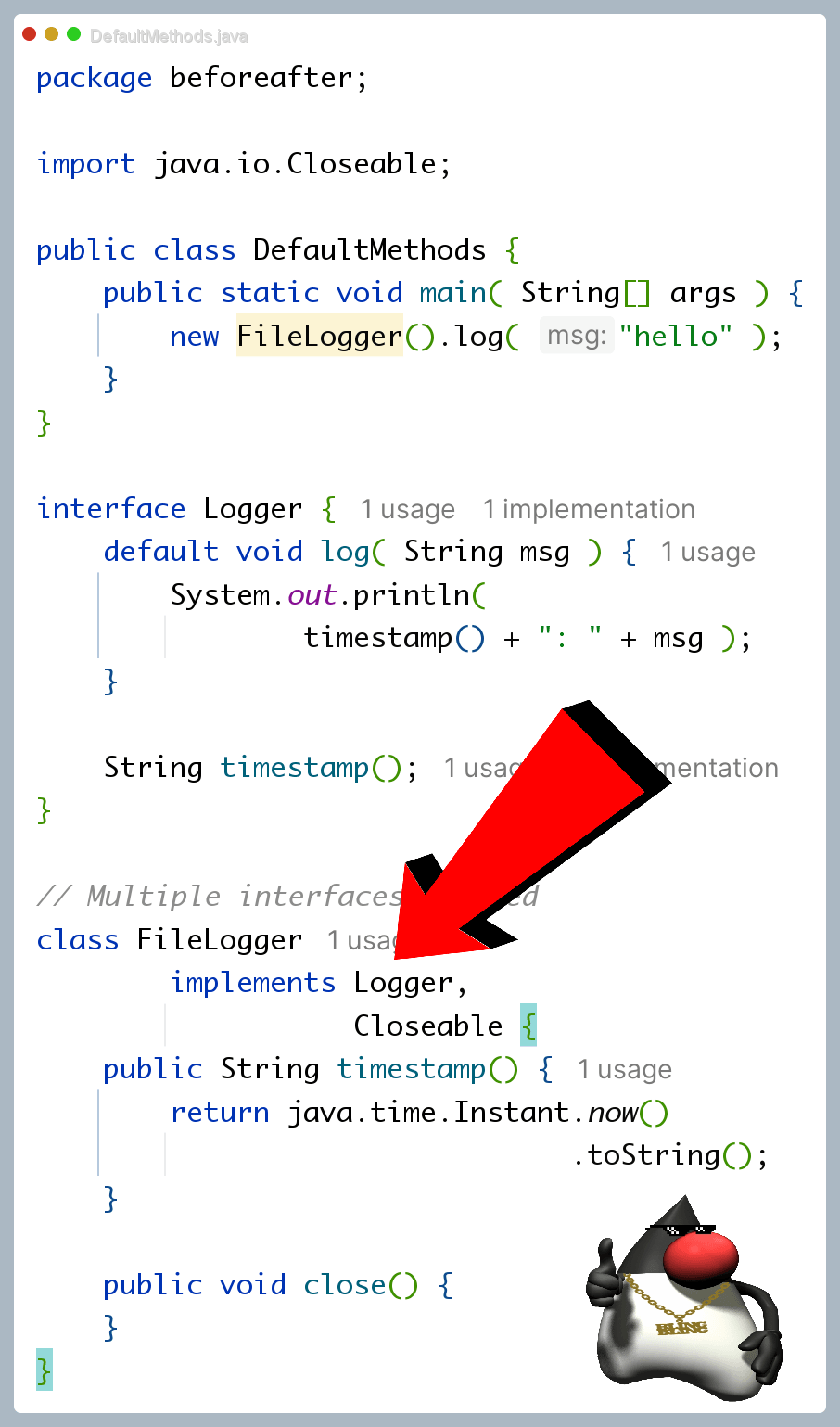
Interfaces can now include default implementations.
public interface Logger {
 default void log(String msg) {
 System.out.println(timestamp() + ": " + msg);
 }
 String timestamp();
}
// Multiple interfaces allowed
public class FileLogger implements Logger, AutoCloseable {
}
Now classes can compose behavior from multiple interfaces.
🔸 WHY DEFAULT METHODS MATTER
▪️ 🔀 Multiple inheritance of behavior
Classes can implement several interfaces that provide functionality.
▪️ 📦 API evolution without breaking code
Libraries can add new methods to interfaces without forcing all implementations to change.
▪️ 🧩 Composable design
Mix small behavioral interfaces together instead of building deep class hierarchies.
🔸 REAL EXAMPLES IN THE JDK
Java itself uses default methods heavily.
Examples include:
▪️ Iterable.forEach()
▪️ Map.getOrDefault()
▪️ Collection.removeIf()
▪️ Comparator.thenComparing()
These methods were added after Java 8 without breaking existing implementations.
🔸 TAKEAWAYS
▪️ Default methods were introduced in Java 8 (2014)
▪️ They allow interfaces to provide method implementations
▪️ They enable multiple inheritance of behavior
▪️ They helped evolve core Java APIs without breaking compatibility
💬 “Interfaces define the contract. Default methods help evolve that contract safely.”
— Inspired by discussions from Brian Goetz, Java Language Architect.
#Java #Java8 #Programming #Software
Go further with Java certification:
Java👇
Spring👇
SpringBook👇
JavaBook👇